1. Project Background
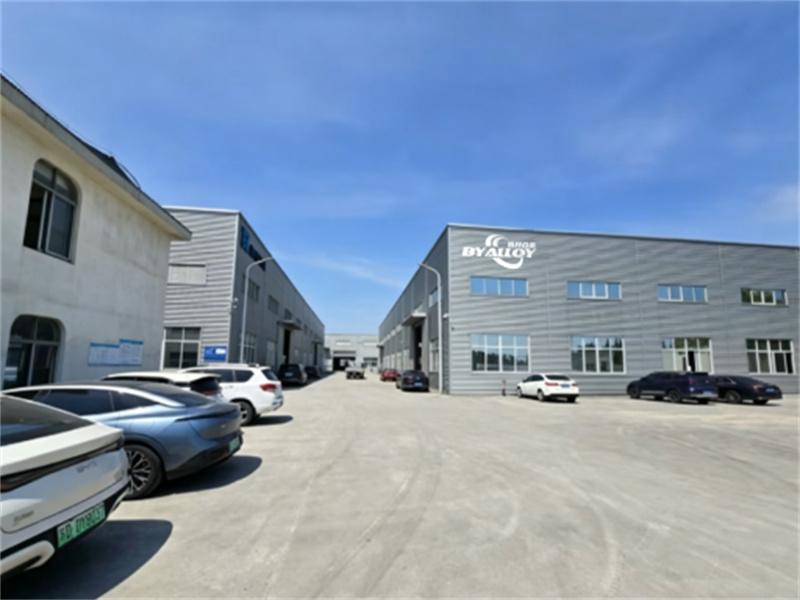
With the rapid development of the global automotive industry and the increasingly strict requirements for energy conservation and emission reduction, turbocharging technology has become a core means to improve engine efficiency and reduce exhaust emissions. Turbocharger turbines, as key core components, require high-temperature alloy materials with excellent high-temperature fatigue resistance, oxidation resistance and creep resistance. At present, the precision casting of high-temperature alloy turbine components in the domestic market has problems such as low forming accuracy, high defect rate and unstable performance, which are mainly dependent on imports. Jiangsu Boyue Alloy, relying on its profound technical accumulation in nickel-based alloy smelting and precision processing, launched this precision casting project to fill the domestic gap in high-end auto turbocharger turbine components and enhance the core competitiveness of the domestic automotive parts industry.
2. Project Objectives
- Develop K418 nickel-based high-temperature alloy materials suitable for auto turbocharger turbines, with stable performance and meeting the technical requirements of automotive grade (tensile strength ≥950MPa at 600℃, oxidation resistance ≥1000 hours at 800℃).
- Build a precision casting production line with an annual output of 50,000 sets of high-temperature alloy turbine components, realizing full-process coverage from material smelting, mold making, precision casting to post-processing.
- Achieve casting qualification rate ≥98.5%, dimensional accuracy ±0.02mm, and successfully supply to domestic and foreign well-known automotive turbocharger manufacturers, with import substitution rate reaching 75%.
3. Project Implementation
- Special Alloy Material R&D: Cooperate with professional research institutes to optimize the composition ratio of K418 nickel-based high-temperature alloy (Ni≥73%, Cr 13-14%, Mo 4-5%), strengthen the precipitation strengthening phase, and improve the high-temperature comprehensive performance of the material. Adopt vacuum induction melting technology to ensure the purity of the alloy, reduce impurity content to below 30ppm, and solve the problems of component segregation and coarse grains in traditional smelting.
- Precision Casting Process Upgrade: Introduce Magma casting simulation software to simulate the fluid temperature field during pouring and the liquid phase temperature field during solidification, optimize the bottom pouring system, and set the pouring temperature at 1550℃ to ensure good filling capacity of the alloy liquid. Adopt investment casting + 3D printing mold technology to realize high-precision rapid forming of complex turbine blade structures, shorten the mold development cycle by 40% and reduce trial production costs by 30%.
- Quality Control and Post-Processing: Equip with spectral analyzers, metallographic microscopes and tensile testing machines to carry out full-process quality inspection, including material composition detection, metallographic structure analysis and mechanical performance testing. Adopt precision grinding and surface polishing technology to ensure that the surface roughness of turbine components is ≤Ra 0.6, and carry out vacuum heat treatment to improve the structural density and fatigue life of the components.
4. Project Achievements
- Market Performance: After the project is put into production, it has an annual output value of 180 million yuan, and has established long-term cooperative relations with domestic and foreign well-known turbocharger manufacturers, with the products exported to Europe, Southeast Asia and other regions, with an annual export volume of 15,000 sets.
- Technological Innovation: Form 8 core patents (3 invention patents), master the key technologies of precision casting of high-temperature alloy turbine components, and the product performance is comparable to imported products, breaking the foreign technical monopoly in this field. The designed casting process and parameters have been verified by industrial production and can be used as a guiding scheme for actual production.
- Industrial Promotion: Drive the development of upstream and downstream industries such as auto parts, mold manufacturing and testing equipment, promote the localization process of high-end auto turbocharger core components, and help the domestic automotive industry achieve energy conservation, emission reduction and high-quality development.
 EN
EN